PDF Download Helping Children Succeed: What Works and Why, by Paul Tough
Helping Children Succeed: What Works And Why, By Paul Tough. The established technology, nowadays support every little thing the human requirements. It consists of the day-to-day tasks, tasks, workplace, entertainment, and more. Among them is the terrific internet link as well as computer system. This problem will certainly ease you to assist among your pastimes, reviewing behavior. So, do you have eager to review this book Helping Children Succeed: What Works And Why, By Paul Tough now?
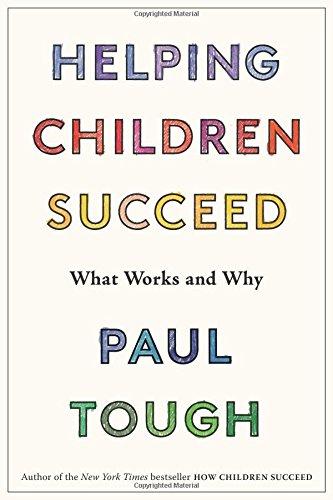
Helping Children Succeed: What Works and Why, by Paul Tough

PDF Download Helping Children Succeed: What Works and Why, by Paul Tough
Pointer in deciding on the most effective book Helping Children Succeed: What Works And Why, By Paul Tough to read this day can be gotten by reading this web page. You could find the most effective book Helping Children Succeed: What Works And Why, By Paul Tough that is marketed in this world. Not only had actually the books published from this country, but likewise the various other countries. As well as currently, we mean you to review Helping Children Succeed: What Works And Why, By Paul Tough as one of the reading materials. This is just one of the best books to accumulate in this site. Look at the resource and look the books Helping Children Succeed: What Works And Why, By Paul Tough You could discover great deals of titles of guides supplied.
As recognized, many individuals say that e-books are the vinyl windows for the globe. It does not suggest that getting book Helping Children Succeed: What Works And Why, By Paul Tough will imply that you can purchase this world. Simply for joke! Checking out a book Helping Children Succeed: What Works And Why, By Paul Tough will opened up an individual to think much better, to keep smile, to delight themselves, and to encourage the expertise. Every publication additionally has their unique to influence the visitor. Have you known why you review this Helping Children Succeed: What Works And Why, By Paul Tough for?
Well, still perplexed of ways to obtain this publication Helping Children Succeed: What Works And Why, By Paul Tough right here without going outside? Merely attach your computer system or gizmo to the net and start downloading Helping Children Succeed: What Works And Why, By Paul Tough Where? This page will certainly show you the link web page to download and install Helping Children Succeed: What Works And Why, By Paul Tough You never ever fret, your favourite e-book will be quicker all yours now. It will certainly be a lot easier to take pleasure in reading Helping Children Succeed: What Works And Why, By Paul Tough by on-line or obtaining the soft file on your kitchen appliance. It will no matter who you are and also just what you are. This publication Helping Children Succeed: What Works And Why, By Paul Tough is composed for public and you are just one of them who can take pleasure in reading of this e-book Helping Children Succeed: What Works And Why, By Paul Tough
Spending the downtime by reading Helping Children Succeed: What Works And Why, By Paul Tough can provide such fantastic experience even you are only seating on your chair in the workplace or in your bed. It will certainly not curse your time. This Helping Children Succeed: What Works And Why, By Paul Tough will assist you to have more priceless time while taking rest. It is really pleasurable when at the noon, with a mug of coffee or tea as well as an e-book Helping Children Succeed: What Works And Why, By Paul Tough in your gizmo or computer monitor. By taking pleasure in the views around, right here you can begin reading.
In How Children Succeed, Paul Tough introduced us to research showing that personal qualities like perseverance, self-control, and conscientiousness play a critical role in children’s success.
Now, in Helping Children Succeed, Tough takes on a new set of pressing questions: What does growing up in poverty do to children’s mental and physical development? How does adversity at home affect their success in the classroom, from preschool to high school? And what practical steps can the adults who are responsible for them—from parents and teachers to policy makers and philanthropists—take to improve their chances for a positive future?
Tough once again encourages us to think in a brand new way about the challenges of childhood. Rather than trying to “teach” skills like grit and self-control, he argues, we should focus instead on creating the kinds of environments, both at home and at school, in which those qualities are most likely to flourish. Mining the latest research in psychology and neuroscience, Tough provides us with insights and strategies for a new approach to childhood adversity, one designed to help many more children succeed.
- Sales Rank: #21473 in Books
- Brand: Houghton Mifflin
- Published on: 2016-05-24
- Released on: 2016-05-24
- Original language: English
- Number of items: 1
- Dimensions: 8.30" h x .80" w x 5.40" l, .0 pounds
- Binding: Hardcover
- 144 pages
- Houghton Mifflin
Review
“Tough’s research demonstrates that all children have the capacity for self-control, grit, and success if given the right tools to work with from birth. Informative and effective methods to help children overcome issues and thrive at home and in school.” — Kirkus Reviews
“The good news is that attention is finally turning to the psychic and emotional qualities our students bring to the classroom. No one is better at chronicling this shift than Paul Tough. In Helping Children Succeed, he asks how, concretely, we can improve students’ noncognitive skills.” —David Brooks, New York Times
“Tough (contributing writer, New York Times Magazine) builds on the research he outlined in his book How Children Succeed to address at great depth the ways adults can build success for children who face the greatest adversity. Contending that it is the environment that shapes children’s ability to develop significant noncognitive skills such as perseverance and optimism, Tough presents research that shows success in these areas is possible for all children. Diving into studies and supporting their conclusions by defining real-life examples, Tough convincingly argues that classroom climate is what needs to be changed in order to shape students’ experiences. While advocating for transformation of a broken system that could turn disadvantaged kids’ lives around, the author also acknowledges the small things that make a difference. Tough calls upon individuals to make those small steps and shows that by looking through a different lens it is possible to see how education can be better structured for the future. Verdict: For readers concerned with finding practical ways to engage with and improve education for those children with the most to lose.” — Rachel Wadham, Brigham Young University, Library Journal
About the Author
PAUL TOUGH’s last book was How Children Succeed: Grit, Curiosity, and the Hidden Power of Character, which spent more than a year on the New York Times hardcover and paperback bestseller lists and was translated into twenty-seven languages. He is also the author of Whatever It Takes: Geoffrey Canada’s Quest to Change Harlem and America. He is a contributing writer to the New York Times Magazine and a regular contributor to the public-radio program This American Life. You can learn more about his work at paultough.com and follow him on Twitter @paultough.
Most helpful customer reviews
120 of 131 people found the following review helpful.
In which Paul Tough stumbles into progressive education and believes he invented the wheel
By Dienne
In his second book, HOW CHILDREN SUCCEED, Paul Tough wrote a wonderful chapter all about the adverse effects that children living in poverty are subject to: physical, cognitive and emotional deficits as a result of the trauma they are more likely to suffer than children living in comparative affluence. But then, unfortunately, for most of the rest of that book, Tough took a hard right turn into “character”: what has since become the “Grit Movement” as championed by Angela Duckworth, whom Tough promoted. Thanks to Duckworth, as promoted by Tough, poor children of color, many of whom face more challenges and obstacles in a day than most people face in a year, are routinely told that their problem is that they lack “grit” and if they could only learn to persevere through obstacles, they too could have the “success” that affluent whites assume as their due. In my review of that book, I said that I hoped Tough would circle back around to explore more deeply the connections among trauma, deprivation, attachment and “character”. This book appears to have heeded my call.
What seems to have changed Tough’s direction is growing research that shows that “grit” cannot be taught, at least not in terms of direct instruction. Imagine, simply telling kids to “work hard, be nice” doesn’t seem to do much. How odd. But Tough stumbled on the work of Deci and Ryan which seems to show that non-cognitive abilities can be improved, but it involves more than rewarding kids for being grittier or punishing them for not. In fact, rewards and punishments actually do harm because they increase extrinsic motivation (motivation to get the reward or avoid the punishment) at the cost of decreasing intrinsic motivation (motivation for pursuing an activity for its own sake). In other words, Tough is trying to morph into Alfie Kohn.
I very much appreciate Tough’s (belated) recognition of research demonstrating the benefits of progressive, whole child, experiential, social-emotional learning. Brain science is showing us that learning is not something that happens in a vacuum, but within the context of human relationships and pursuits based on interest and relevance. Education is not about stuffing random, disconnected facts into kids’ heads and seeing what they can regurgitate on a test, but rather about exciting and channeling (or, at the very least, not squelching) children’s innate drive to explore, experiment and adapt. I am very happy that Tough seems to understand the challenges that poverty presents to that natural process and how understanding, supportive relationships and wraparound services are ways to ameliorate some of the worst effects.
But, as always with Tough, there is much to argue with. First, Tough can’t seem to get past the quest for test scores. All of the interventions he supports are because they raise test scores. Standardized tests are a snapshot in time which, at best, measure how well particular students were able, in that particular moment, to take that particular test. They have little bearing on a child’s actual abilities or their likely success in college or the real world, much less their interests or who they are as people. The purpose of education is not to churn out children as widgets that can be plugged into the corporate world. The purpose of education is to develop unique, healthy, well-rounded individuals who are prepared to actively participate in a democratic republic.
Second, after spending his previous books building up the likes of Geoffrey Canada (who twice “fired” an entire cohort of students because they weren’t performing well on the standardized tests) and Angela Duckworth (who is profiting from teaching children in poverty “grit” skills, even though she herself denies that’s what her work should be used for), Tough refuses to admit any previous error or fully acknowledge the implications of his new perspective. I never would have thought I would be an admirer of Diane Ravitch after her work as Assistant Secretary of Education under George H.W. Bush and her launching of the “accountability” movement, but she has fully renounced her former positions and openly admitted the error of her thinking. Tough needs to take a similar openly self-reflective course.
I could also fault Tough for refusing to follow his own research to its logical conclusion. If a child’s environment is so important to his/her development (and it is), then why are we only tinkering around the edges of the environment? If poverty is so devastating to children who grow up in it, why focus on education for children in poverty, rather than the environment of poverty itself? Why not call for solutions to income/wealth inequality? Why not structural social changes to eliminate poverty? An end to “austerity” and “neoliberalism”? A call for good, living wage jobs with good benefits? A call for a strong social safety net, universal healthcare and housing as rights? But Tough doesn’t seem to think such grand changes are possible. Neoliberalism is the future, There Is No Alternative. The best we can do is make everyone as comfortable as possible within their allotted station in life. We can improve education for children in poverty, but there’s nothing we can do about poverty itself.
Finally, one of my biggest peeves with Tough (and many other “reformers”, such as KIPP) is their complete failure to acknowledge and credit the huge body of work that has gone before them. After promoting “grit” and “no excuses” and other harmful policies, such “reformers” are discovering just how harmful they are and quietly revising their stance to become kinder and gentler and focusing more on relationships, less on punishment. But progressive education is no new thing. It’s been around since at least John Dewey’s day 100 years ago. There is a substantial body of research demonstrating the effectiveness of whole-person, student directed, experiential learning. In fact, the superiority of such education over rote, test-based, direct instruction is so clear that for decades the elite have sent their own kids to schools that use progressive models, such as Sidwell Friends, Lakeside Academy and the University of Chicago Lab School. For decades the powers that be have known what is best for their own children, while foisting “grit” and standardized testing on other people’s children. I guess I’m supposed to be grateful that, in the never-ending quest for “innovation”, the “reformers” are finally stumbling onto what’s been known for 100 years, and maybe now everybody’s children can get an education rooted in whole-child development supported by caring relationships and meeting basic needs. And, if in fact, Tough’s recognition among the “reformers” allows for more progressive education for children in poverty (as well as children not in poverty, but not rich either), then I will be grateful. But please don’t pretend that this is anything new or “innovative”. In fact, Tough and others are quite late to the game.
6 of 6 people found the following review helpful.
Three Stars
By Books & Fresh Air
Not what I was hoping for. It is general, not specific enough to be put in to practice.
0 of 0 people found the following review helpful.
I love how these sections flow together seamlessly and build off ...
By rdannen
A 5 Star Idea with a 4 Star Outcome
The book Helping Children Succeed: What Works and Why was written by Paul Tough in 2016 and published by Houghton Mifflin Harcourt as a follow up to the research he conducted for his previous book How Children Succeed. As a teacher, the topics that everyone strives to accomplish is understanding how children succeed and being able to find ways to help them succeed. Based on a need to understand those aspects drew my attention to reading more in depth about it. With the rise in high stakes standardized testing, there is a modern obsession with raising students test scores instead of focusing on how to support children into exploring ways to be curious, optimistic, persistent and use self-control. Tough’s book is built around the idea that children in poverty struggle in school which results in lower test scores and affects students throughout their life, making it crucial for educators to understand the affects of growing up in adversity, especially since childhood poverty is on the rise. Since 2013, more than 51% of the nation’s children “fall below the federal government’s threshold for being low income, meaning they are eligible for free or subsidized school lunch” (p.1). After hitting this milestone, American public schools are now making a mission to help children in poverty succeed which is where Tough developed his 125 page book.
Throughout Tough’s book there are 23 sections where he breaks down each topic. The sections are: adversity, strategies, skills, stress, parents, trauma, neglect, early intervention, attachment, home visiting, beyond the home, building blocks, discipline, incentives, motivation, assessment, messages, mindsets, relationships, pedagogy, challenge, deeper learning, and solutions. I love how these sections flow together seamlessly and build off of each other as more information is given to the reader. Tough begins by explaining how adversity affects student success from birth and moves into discussing the importance of non-cognitive skills like persistence, growth mindset and grit which is best learned through experience as opposed to explicit instruction. Tough states that “No child ever learned curiosity by filling out curiosity worksheets” (12). Throughout the book, Tough mentions the work of Deci and Ryan which stresses that non-cognitive abilities can be improved, but it involves more than simply rewards and punishments. He notes that education is not about overloading students with random standards based information, but creating excitement and drive to explore and experiment more, which can be a difficult task for students in poverty who need additional support.
Tough explains that children who do not come from a home where they are able to form secure attachments to positive adults do not have the perseverance, grit or non-cognitive traits necessary to be successful. Character is developed in environments which children form secure attachments to teachers and caregivers, and are taught in ways that stimulate their autonomy and ability to solve problems. From this, he introduced ideas and suggestions for educators to help develop those skills within students. Tough mentions Deci and Ryan’s work by stating that the three basic human needs that need to be supported in the classroom are autonomy, competence and relatedness. By creating environments that promote these three feelings, students are more motivated and more successful. Overall throughout the book, Tough stresses the importance of the environment children are in whether it is at home or at school.
New York Times said it best that Tough “Illuminates the extremes of American childhood: for rich kids, a safety net drawn so tight it’s a harness; for poor kids, almost nothing to break their fall.” Although students in poverty face many obstacles at home that challenge their ability to succeed in school, Tough mentions that the school environment needs to change. He closes out the book by stating that we need to change our policies, practices and way of thinking in order to help children succeed. As a teacher, we can provide 6 hours a day of a supporting environment starting at the age of 5, but what he also states is that the early years of a child’s life is when they are most impacted by adversity. Amounts of stress and a lack of serve and return interactions affects children starting at a young age. To me, it seems like the real issue surrounding this book is poverty throughout the United States. For a teacher, he gives many ways to help children succeed who grow up in adversity which is beneficial to know, but it seems like the best way to tackle the issue is to focus on decreasing poverty throughout the United States. Although I believe that every new teacher could benefit from reading about child development to understand how childhood environments affects children and learn best classroom strategies, I think this book is also suited for new parents to realize how important the early childhood environment is for their children. If you are interested in learning more about Tough’s point of view, his books are available on Amazon and at major bookstores with a retail price of $18.99.
Helping Children Succeed: What Works and Why, by Paul Tough PDF
Helping Children Succeed: What Works and Why, by Paul Tough EPub
Helping Children Succeed: What Works and Why, by Paul Tough Doc
Helping Children Succeed: What Works and Why, by Paul Tough iBooks
Helping Children Succeed: What Works and Why, by Paul Tough rtf
Helping Children Succeed: What Works and Why, by Paul Tough Mobipocket
Helping Children Succeed: What Works and Why, by Paul Tough Kindle

Tidak ada komentar:
Posting Komentar